
Sandstone Pool Coping
Swimming pool coping serves a functional purpose: keeping the pool water in place and separating it from the deck. Making this coping from natural stone creates a seamless flow and acts as a visual ‘bridge’ between the sharp lines of a home and the organic fluidity of a garden. Natural stone pool coping amplifies the beauty of your architectural design.
Sandstone is a natural stone pool coping chosen for its grip, weather resistance, and usability. Indian sandstone pool coping is widely recognised for its consistent quality and a range of finishes, depending on the project.
What is Sandstone Pool Coping? Why is it Important?
The stone edge you sit on, with your feet dangling in the pool, or the edge you hold onto when pulling yourself out, is pool coping. Sandstone pool coping is merely this edge, frequently known as a ‘cap’, but only made with natural sandstone.
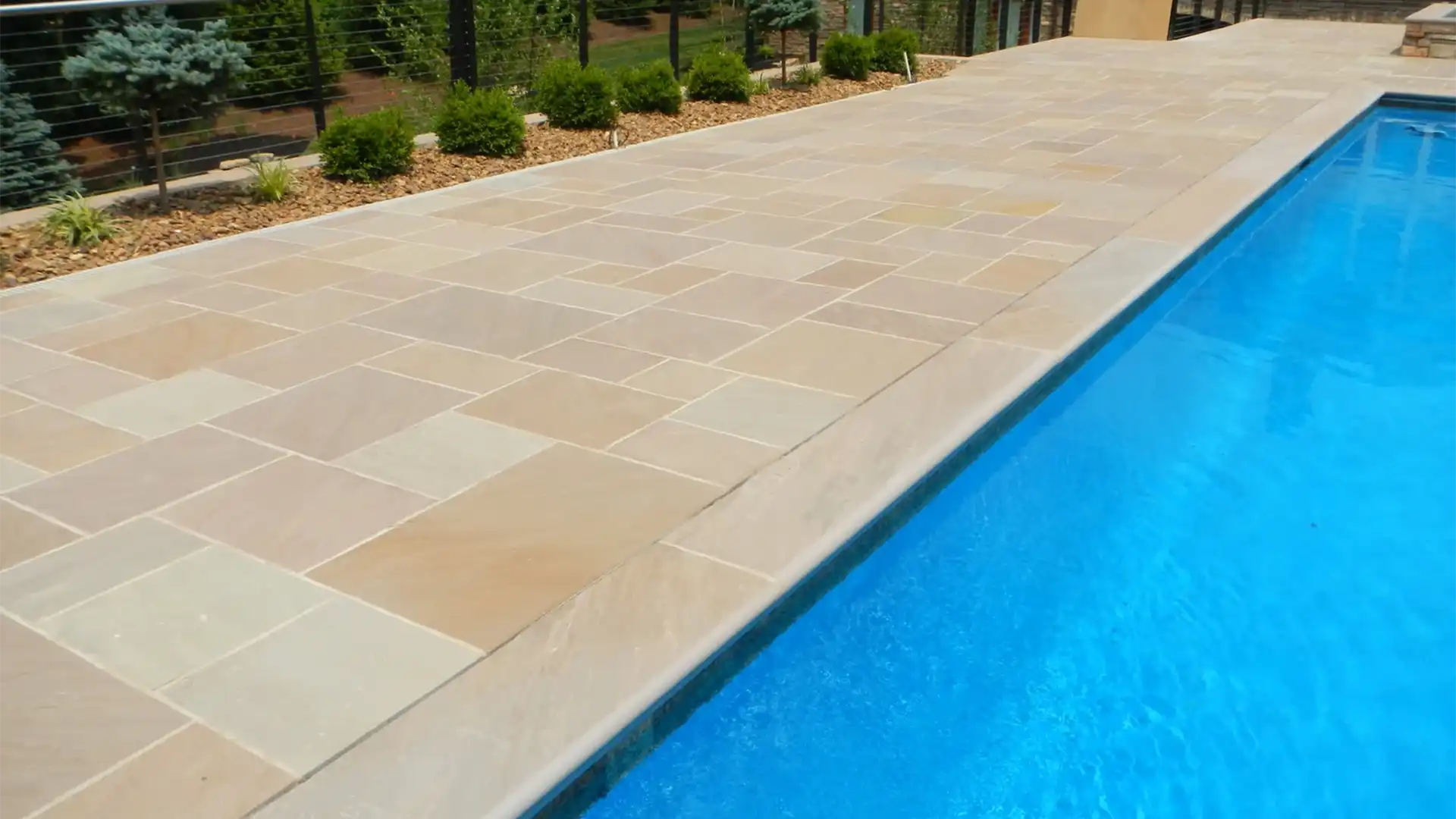
Natural stone pool coping carries the benefits of sandstone:
- Anti-slip: The textured sandstone imparts a natural grip to the edge. This rim is often where people step, and an anti-slip Indian sandstone pool coping makes the pool area safe.
- Premium Look: The natural stone pool coping carries the variation in tone and texture of the sandstone. It harmonises with the paving, outdoor seating and planting, creating a natural progression of scenery from home to the pool.
Benefits of Indian Sandstone Pool Coping
- Weather Resistance: Indian sandstone pool coping can stand heat, rain, and frequent temperature changes. The surface remains cool even under direct sunlight.
- Slip Resistance: Sandstone’s textured surface provides a good grip underfoot in wet areas around the pool
- Colours and Finishes: Sandstone pool coping is available in a variety of tones, including beige, grey, brown, and buff. This means designers have a wider range to select from to suit their design.
How to Choose the Right Sandstone Pool Coping?
- Textured Stone for Natural Landscape: A textured stone will work well in garden layouts, complementing the natural surroundings. The textured surface will hide any imperfections, and clean edges will match the architecture.
- Choosing the Right Edge Profile: A bullnose design softens the edgy look of the perimeter and is comfortable for sitting. A natural design looks aged and heritage. Add a square design for a geometric look.
- Thickness and Surface Finish: Stone thickness can equally impact your design. A thicker stone will mould the aesthetic into the premium-ness you desire while providing a solid look. Meanwhile, a sanded finish will add a grip.
Indian Sandstone Pool Coping: Supply and Export
Architects and designers seeking a high-end pool finish often choose Indian sandstone for its consistent quality and reliability. Here is why Indian sandstone pool decking is preferred by architects, designers and importers:
- Bulk Availability: Sandstone is available in India in large amounts, with the possibility for controlled sizing and colour consistency
- Sizing and Finishes: Based on the project requirements, tailored cutting and customised surface finish options are available
- Quality Standards: Most suppliers conduct quality checks before shipping the product
- Packaging: Specialised packaging is used to reduce breakage and wastage in transport
Natural Stone Pool Coping vs Concrete Coping
Choosing between natural stone and concrete comes down to good design versus a lower price tag. Sandstone is considered a ‘premium’ choice for its ability to age while retaining structural integrity. Here’s a quick guide to make the right selection:
| Feature | Sandstone Pool Coping | Concrete Coping |
| Durability | Capable of handling changing weather and UV exposure; better lifespan | Susceptible to cracking or ‘spalling’ over time due to weather cycles |
| Aesthetics | Features natural variations in tone, grain, and texture; offers a high-end look | Uniform, predictable, and man-made appearance; can look “flat” |
| Maintenance | Requires periodic sealing; holds its surface texture and integrity exceptionally well | May require repairs for cracks; colour can fade or yellow with sun exposure |
| Long-Term Cost | Higher upfront cost, but performs better and lasts longer with fewer replacements | Lower initial investment, but may incur higher long-term costs for repair/replacement |
Installation and Upkeep Tips for Sandstone Pool Coping
To preserve your natural stone pool coping and ensure it remains structurally sound, proper care is essential during and after installation. The subsequent guidelines detail the essential steps for proper installation, protection and long-term maintenance required to keep natural stone coping in peak condition.
- Preparation: Ensure that the base you are placing the sandstone on is stable. Align the pieces to keep the joints even and seamless.
- Sealing: You wouldn’t want moisture to seep in. To prevent this, use a good sealant regularly.
- Cleaning: Regular maintenance is essential to preserve the original look of your Indian sandstone. Clean the surface with a mild detergent and avoid harsh chemicals.
Why Choose Stonestry for Sandstone Pool Coping?
At Stonestry, we strive to ensure breakage-free delivery of authentic sandstone varieties for pool coping.